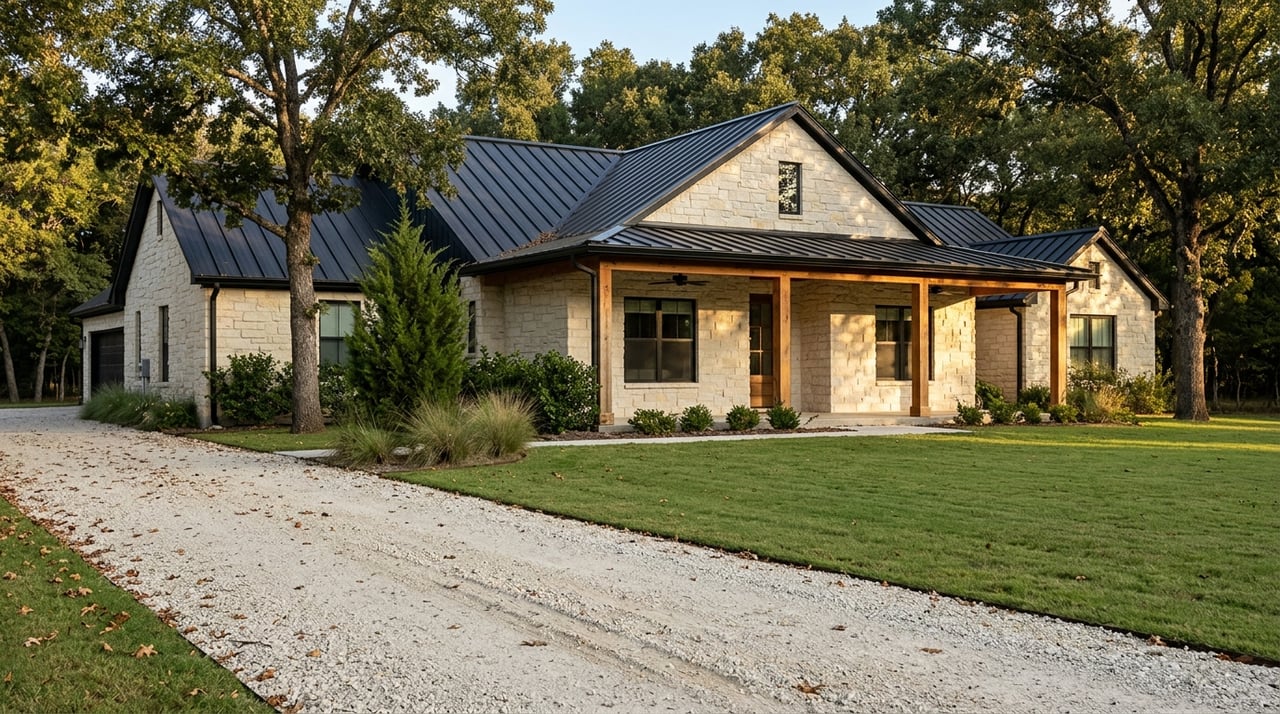
Guiding McLendon-Chisholm Land and Estate Sales
April 23, 2026
April 23, 2026
If you are selling land, handling an estate, or trying to close a probate property in McLendon-Chisholm, you are not dealing with a typical home sale. Questions about authority, land use, surveys, tax status, and title often matter just as much as price. The good news is that when you understand the local rules and the right order of steps, the process gets much more manageable. Let’s dive in.
McLendon-Chisholm sits in a very specific position inside a fast-growing county. The city had a 2020 Census population of 3,562, while Rockwall County’s estimated population reached 140,738 as of July 1, 2025, a 30.5% increase from the April 2020 base, according to Texas demographic data.
That matters because McLendon-Chisholm is still planning for a rural, low-density character even as the surrounding area grows. The city’s comprehensive plan emphasizes planned development, preservation of open space and agricultural land uses, and focused commercial growth along corridors like SH 205 and FM 550.
For you as a seller or estate representative, that means land value is often shaped by factors beyond the condition of a house. Parcel layout, road frontage, access, current use, zoning context, and future land use can all influence buyer demand and pricing.
Acreage in McLendon-Chisholm should not be priced like a standard subdivision property. The USDA’s farmland value guidance notes that land values depend on broad market conditions and parcel-specific features such as soil quality, amenity value, and urban proximity.
Texas A&M’s rural land research reinforces that point. In the Northeast Texas region, rural land prices were reported at $9,313 per acre in 3Q2025 and $9,159 per acre in 4Q2025, with typical transactions around 118 to 120 acres, according to Texas A&M’s rural land market report.
Those numbers are useful context, but they are not direct comps for a specific McLendon-Chisholm tract. A smaller parcel near key roads or inside a path of future growth may trade very differently than a larger rural tract elsewhere in the region.
When buyers evaluate land in this area, they often focus on practical details before anything else, including:
That is why a strong land-sale strategy usually starts with documents and positioning, not just photos and an asking price.
If your property may appeal to future builders, investors, or buyers planning a tract split, city planning materials become part of the conversation. McLendon-Chisholm keeps its maps page current with future land use and zoning information, including 2025 updates.
These maps can help you understand how your tract fits into the city’s broader planning framework. They do not guarantee what can happen on a property, but they can shape how buyers view opportunity, risk, and timeline.
In other words, pricing raw land or estate acreage in McLendon-Chisholm often involves more than recent sales alone. It also involves understanding what the parcel is today and how it may fit within local planning rules.
If the property is part of an estate, the first question is often simple: Who has the legal authority to sell? In Texas, that issue can determine the entire timeline.
The Texas State Law Library’s probate guide explains that an executor is the person named in a will to carry out the decedent’s wishes, but the court must first approve that executor. After appointment, the executor collects and distributes estate property.
The same guide explains that independent administration is typically faster and less expensive than dependent administration. For many families, that is one of the most important process differences in a probate sale.
Texas law draws a key distinction between independent authority and court-supervised authority. Under Texas Estates Code Section 402.002, an independent executor may generally act without a court order.
Under the same statutory framework, if the will authorizes the executor to sell property, a separate court order is generally not required for that sale. If the will does not provide that authority, the estate property generally may not be sold without court approval.
That means many probate sale delays come from unresolved authority issues, not from lack of buyer interest. Before the property ever goes live, you want clarity on who can sign, what the will says, and what the court has already approved.
Texas law also expects estate property to be cared for responsibly. Texas Estates Code Sections 351.101 and 351.102 require a personal representative to care for estate property as a prudent person would care for their own property and to collect title papers and related records.
That has a very practical effect on a sale. If you are the executor or personal representative, keeping the property secure, organized, and document-ready can help avoid title issues and closing delays later.
For land or non-standard property, that may include gathering surveys, tax records, legal descriptions, prior deeds, and any documents tied to current use or access.
If the land has agricultural use, you also need to understand its tax treatment before you market it. The Texas Comptroller explains that qualifying farm and ranch land may be appraised based on productivity value rather than market value, which is usually lower.
That can be helpful while the land remains in qualifying use. But if the land changes to a non-agricultural use, the owner may owe rollback tax for the prior three years, plus interest in some cases.
For sellers, heirs, and buyers alike, this is a major due-diligence point. A property may look attractive on paper, but a use change can alter the carrying cost or the true net from a sale.
Land sales often involve assumptions that do not hold up once the paperwork starts. If a buyer wants to split a tract, reconfigure boundaries, or prepare for future development, county requirements matter.
According to Rockwall County property-record guidance, plat submissions require a registered professional land surveyor’s certification, city approval if the land is within the city’s ETJ, and original tax certificates issued within 90 days showing no delinquent ad valorem taxes. The county also requires a complete legal description and original signatures and seals.
This is why a current survey and clean legal description are so important. It is much easier to answer buyer questions up front than to renegotiate a deal when missing land documents surface late.
It is tempting to rely on a quick online search when preparing to sell estate property or acreage. But Rockwall County states that its online database is not the official repository of real-property records, and certain instruments are redacted as of June 20, 2025, under HB 4350, according to the county’s property records page.
For you, that means title work should not be based on a surface-level records check alone. Certified records and title-company review still play a central role, especially in probate, inherited property, and land transactions with older chains of title.
Before you bring a McLendon-Chisholm land, estate, or probate property to market, it helps to have a clean file. In most cases, the key items include:
The exact list depends on the property. A raw land sale, a tract split, and a probate home on acreage can each require a different approach.
There is no one universal timeline for probate or estate sales in Texas. The process depends on the type of administration, whether the will gives sale authority, how quickly documents can be gathered, and whether title issues appear.
The Texas probate administration guide makes clear that independent administration is generally faster and less expensive than dependent administration. Even so, county filings, records review, and title coordination can still affect timing.
For land and probate property, the fastest closings usually happen when authority is clear and documents are prepared early. The slowest closings usually involve uncertainty about title, tax status, legal descriptions, or sale authority.
A McLendon-Chisholm sale can look simple from the outside but become technical fast. Local planning priorities, acreage valuation, ag status, probate authority, and county filing rules all shape the path to closing.
That is why a relationship-first, detail-driven process matters. With the right preparation, you can reduce surprises, present the property more clearly, and move toward closing with confidence.
If you are preparing to sell land, manage an inherited property, or navigate a probate sale in Rockwall County, connect with Blake Bailey for responsive, local guidance backed by professional marketing and a client-first approach.
Stay up to date on the latest real estate trends.
I take representation seriously. With the over saturation of licensed agents in Texas, I know what a privilege it is to represent clients.