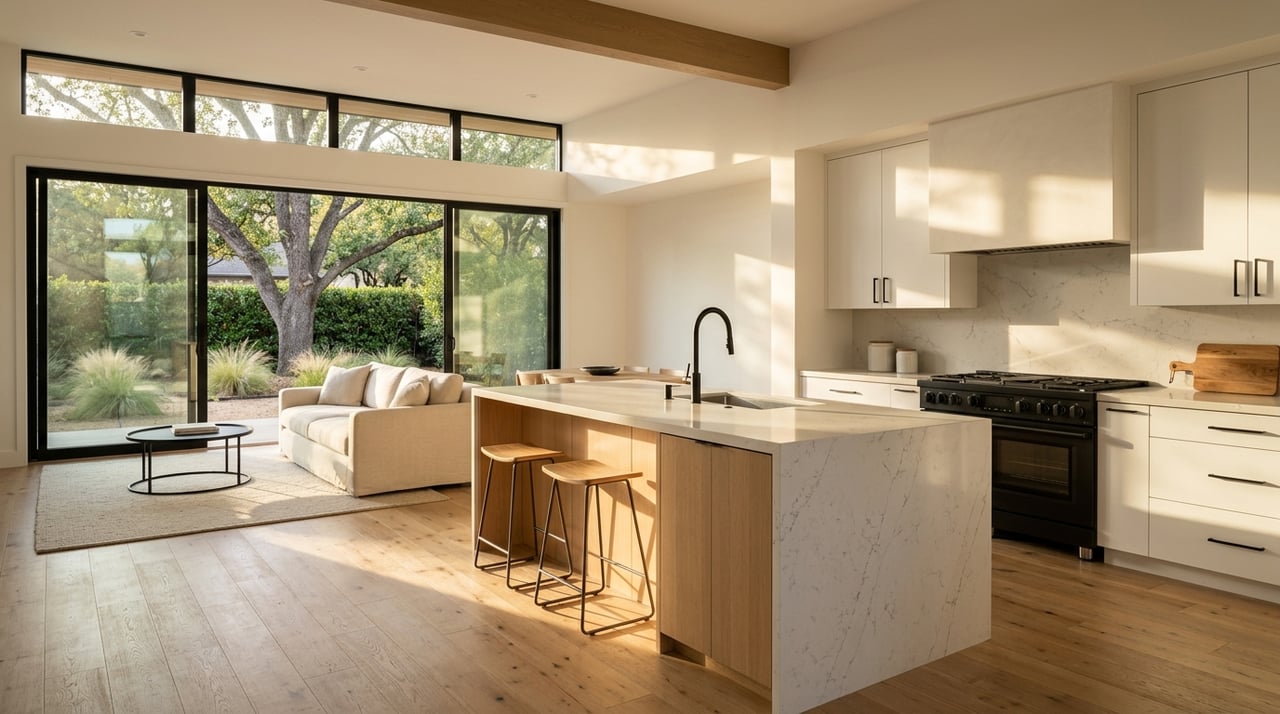
Build a Custom Home in Heath Near the Lake With Confidence
June 11, 2026
June 11, 2026
If you have ever pictured a custom home near Lake Ray Hubbard, Heath likely checks a lot of boxes. You get a long-established lakeside setting, larger homesites in some areas, and the chance to build around the way you actually live. But in Heath, building near the lake is not as simple as buying land and picking a floor plan. This guide walks you through what to check first, what can affect your design, and how to plan for a smoother build process. Let’s dive in.
Heath has been a lakeside city for decades. The city notes that Heath incorporated in 1959, and Lake Ray Hubbard was created in 1969. Today, the city’s planning approach is focused on guiding growth while protecting the existing environment and infrastructure.
That matters if you want to build a custom home near the lake. In Heath, the process is shaped by the comprehensive plan, zoning ordinance, subdivision regulations, and site-specific reviews that can affect what you build and how you use the lot.
Some lake-adjacent parcels fall within Heath’s Lake Edge Zoning District. That district is tied to the Dallas Lake Ray Hubbard take line and the 435.5-foot mean sea level contour. It was created to preserve shoreline views, protect water quality, maintain access for public and utility personnel, and address lake fluctuations and terrain-related setbacks.
For you as a buyer, that means two lots near the lake may not offer the same building opportunities. A lot’s exact location can affect setback requirements, usable outdoor space, and whether shoreline features like a dock, boathouse, fixed pier, or lakeside gazebo may be allowed.
Heath’s planning department says its land-use code is designed to balance new development with protection of the city’s character. In practical terms, you should expect a more regulated process than you might see in a less shoreline-sensitive market.
That is not necessarily a bad thing. It can help protect the long-term feel of the area, but it also means early due diligence is essential before you commit to a lot.
When you are building custom, the lot is the foundation of every other decision. Before you think too far ahead about finishes or floor plans, make sure the property can support the home and features you want.
Heath offers a public GIS portal with parcel, abstract, and zoning information, along with downloadable zoning, sewer, future land use, and thoroughfare maps. That makes zoning confirmation one of the first steps in your research.
The city’s zoning rules vary by district. Standards can include minimum lot area, frontage, depth, setbacks, building coverage, and height limits. Instead of assuming all Heath lots work the same way, verify the building envelope for the exact parcel you are considering.
Near the lake, floodplain and drainage review matters. Heath’s floodplain administrator reviews permit applications to confirm that proposed sites are reasonably safe from flooding and to make sure any other required approvals are in place.
If you are considering a shoreline-sensitive or lower-lying lot, this step can affect both house placement and design decisions. It is smart to understand flood-hazard conditions early, before you invest time and money into plans that may need to change.
On lake-edge lots, easements can be a major factor. Heath’s lake-edge ordinance references blanket access easements and the protection of utility easements, and some exceptions to setbacks or area requirements may require city or council review.
This is one reason lakefront land can be more complex than it first appears. A beautiful view does not always mean a simple build site, so you want a clear picture of access, utility restrictions, and any approval hurdles upfront.
Heath says site plans help ensure orderly development and adequate provision of transportation, water, sewage, drainage, and other public requirements. The city’s plan packet can require scaled drawings that show structures on the subject property and nearby structures within 100 feet.
For you, this means lot evaluation is not just about size. It is also about how the home, driveway, utilities, drainage, and nearby improvements all fit together on the site.
Utilities can make or break the ease of a custom build. In Heath, they should be part of your early lot screening, not something you leave until after closing.
Heath’s single-family permit form allows either city sanitary sewer or OSSF septic. That means sewer availability is lot-specific, and you should verify it early in the process.
If you are comparing multiple homesites, this can be a meaningful difference. Utility setup affects budget, design, and site planning, especially if you are building on raw land or at the edge of existing service areas.
Heath lists the City of Rockwall as its water supplier, with Rockwall in the North Texas Municipal Water District system. The city also identifies Atmos Energy and Oncor Electric Delivery as the main utility providers.
The city’s meter-set process says separate domestic and irrigation water meters are required, and the utility deposit is applied to the first bill. That is helpful to know as you build out your upfront cost estimates.
Heath’s Building & Inspections Department handles plan review, building permits, and inspections for new construction. The city also states that utilities cannot be connected until a building permit is issued and posted on the property.
That means permitting is not just another box to check. It is directly tied to the timeline for getting your project moving on site.
Utility planning should include long-term ownership costs too. Heath says FY 2026 water and sewer rates increased 25% due to higher NTMWD costs and Water Bridge Plan funding.
The city’s water-wise guidance also says Stage 1 watering is limited to twice per week, with no watering between 10 a.m. and 6 p.m. If your vision includes extensive landscaping, irrigation planning should reflect those rules from the start.
A custom home near the lake needs more than a good design. It also needs a plan that fits Heath’s approval process.
Effective October 1, 2024, Heath adopted the 2021 ICC residential, plumbing, mechanical, fuel gas, energy, fire, and building codes, plus the 2023 National Electrical Code. The city also notes that work done without a permit can be fined up to $500.
That should set the tone for your project from day one. Your builder and design team need to be organized, current on local requirements, and ready for inspections throughout the build.
Before digging, the city instructs homeowners and contractors to contact 811 and the local water and wastewater provider two business days in advance. This is especially important on treed lots, undeveloped land, or homesites where trenching and grading are still being worked out.
It is a simple step, but an important one. Early coordination can help prevent delays and protect existing underground lines.
Heath says its Fire Flow Capital Improvement Plan was accelerated to a five-year schedule from 2024 to 2029 to bring deficient areas up to a minimum 1,500 gallons per minute fire flow. If you are looking at an older neighborhood or a lot near the edge of service, ask whether upgrades are already complete or still planned.
This may not be the first thing buyers think about, but it can influence both feasibility and timing. On a custom build, infrastructure details matter.
One of the biggest mistakes in a custom-home search is falling in love with a house plan before confirming it fits the lot. In Heath, that is especially important near the lake.
In the lake-edge district, design is not only about the home itself. The ordinance also addresses boat-related improvements, natural materials, pilings, outdoor lighting, landscaping, private utilities, and access for public-service vehicles.
That means your outdoor living ideas need to be matched to the property and the rules that apply there. Fence placement, shoreline access, and lakeside structures can all become part of the approval conversation.
If the homesite is in a flood-prone or shoreline-sensitive area, design decisions should be coordinated with the floodplain administrator and the city’s site-plan review process. That can help keep the project aligned with drainage, access, and flood-safety requirements.
In other words, the lot should shape the design from the beginning. That is often the key to avoiding expensive redesigns later.
Custom homes take time, and lake-area homes can take more. A realistic baseline matters so you can make smart decisions about financing, move timing, and whether custom is truly the right path for you.
A custom home often takes three to six months in the design phase. After that, the construction phase typically lasts at least 12 to 16 months, with more time possible if permits, approvals, or changes slow the process.
In Heath, lake-edge rules, floodplain checks, utility coordination, and site-specific approvals can add complexity. If you are on a tight timeline, that should factor into your decision early.
Custom builds can also bring added costs beyond the structure itself. Planning and design work, architect fees, material selections, and site-specific improvements can all affect the total budget.
That is another reason lot due diligence matters so much. The wrong parcel can create hidden costs that are easy to miss at first glance.
For many buyers, the real question is not whether a custom home sounds appealing. It is whether it makes more sense than buying an existing home.
When you build custom, you have more say in lot placement, floor plan, finishes, and how the home lives day to day. If you have a clear vision and want something tailored to your needs, that control can be worth the added effort.
This is especially true if the homesite itself is part of the goal. A specific lake view, outdoor setup, or orientation may be hard to find in resale inventory.
A resale purchase typically avoids many of the extra steps that come with new construction. You are not navigating the same permit sequence, utility coordination, site preparation, or shoreline-related approvals.
If your priority is moving sooner with less complexity, resale or a spec home may be a better fit. Some buyers also look at stock plans or early-stage spec homes when they want some personalization without the full custom timeline.
If you are seriously considering building a custom home in Heath near the lake, start here:
A custom build in Heath can be an incredible opportunity, but the best outcomes usually start with careful planning. When you understand the lot, the rules, and the timeline early, you can move forward with a lot more confidence.
If you are weighing land options, comparing custom versus resale, or trying to understand what a specific Heath lot can realistically support, Blake Bailey can help you approach the process with local insight, clear communication, and the kind of hands-on guidance that keeps small details from becoming big surprises.
Stay up to date on the latest real estate trends.
I take representation seriously. With the over saturation of licensed agents in Texas, I know what a privilege it is to represent clients.