Your Royse City Listing Isn't Losing on Price. It's Losing on Payment.
September 24, 2026
September 24, 2026
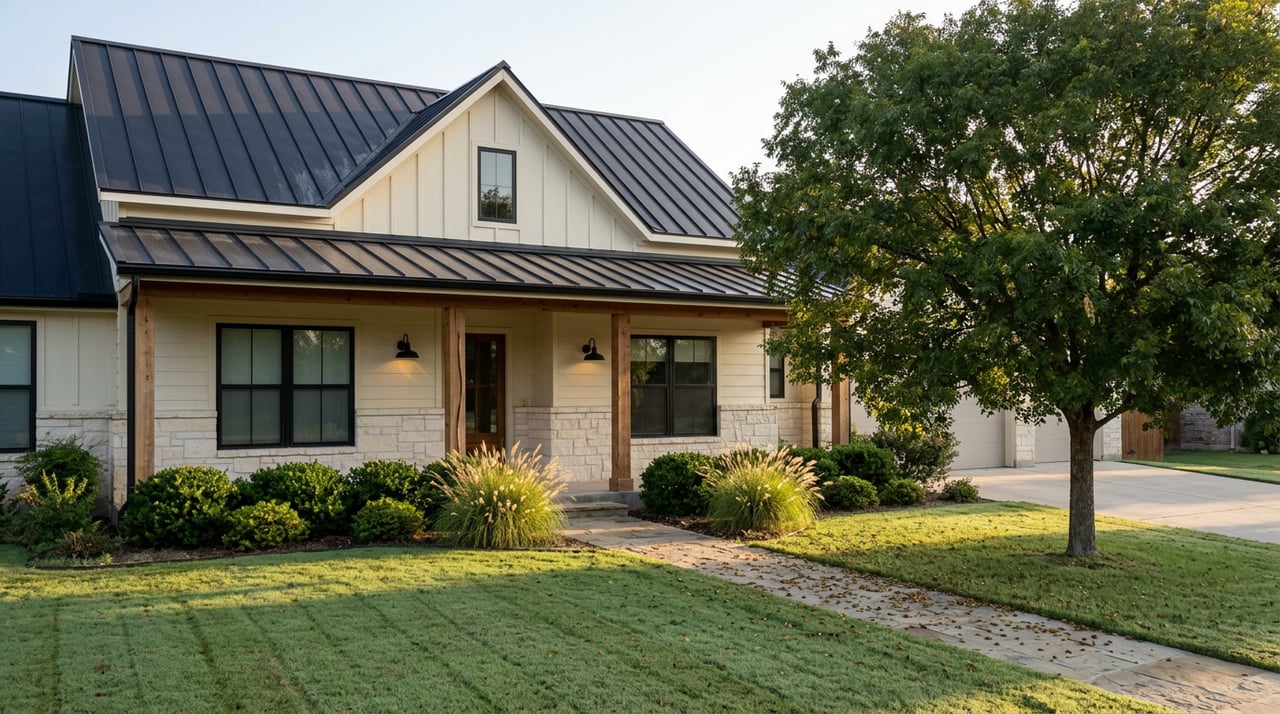
A resale in Royse City lists at $339,000. Three streets over, in a builder's newest phase, a comparable new-construction home is also priced at $339,000. On paper, it's a coin flip. In practice, the resale sits for 90 days while the new build closes in three weeks, and the seller can't figure out why matching the price didn't matter.
It didn't matter because price was never the number buyers were comparing. The number they were comparing was the monthly payment, and the builder had a lever the resale seller didn't know existed.
Builders have spent 2026 in a strange position. Standing inventory is piling up, buyers are stretched by mortgage rates that have pushed back toward 7%, and the obvious move would be to cut prices until homes sell. Some builders are doing exactly that. Nationally, roughly 37% of builders reported cutting list prices in August 2026, with an average cut around 5%, according to National Association of Realtors reporting.
But the bigger, quieter lever isn't the price cut. It's the rate buydown. A permanent buydown lets a builder pay points upfront so a buyer's mortgage rate stays reduced for the life of the loan, without ever touching the sticker price. The American Enterprise Institute's housing research has argued that this tool has let the largest builders avoid what would otherwise have been a 10 to 12 percent price correction on homes carrying a buydown. The logic is simple: cutting a price by one dollar drags down every comparable sale in the community, including the ones that already closed at full price. A financing subsidy doesn't touch the comp. The buyer still gets a real discount. It just shows up in the interest rate instead of the deed.
This is why Freddie Mac has specifically instructed appraisers to weigh financing concessions when valuing new construction, warning that buydowns can be used to prop up a sale price that doesn't reflect what the home would fetch without the subsidy. Nationally, the new-home price premium over existing homes shrank to just 7.8% in the second quarter of 2026, an all-time low, even as builders held their median list price near $450,797 against a rising existing-home median of $418,300. The gap is closing through financing, not through the number on the sign.
Royse City's spring 2026 market data reads like a case study in this exact dynamic. Active listings climbed to 448 in March 2026, up 9% from a year earlier. Homes averaged 89 days on market. Inventory sat at 6.2 months, solidly in buyer-favorable territory. And yet the median sold price barely moved: $339,995, down just two-tenths of a percent from March 2025.
That combination should be strange. Supply up, demand pressure down, days on market climbing, and pricing essentially frozen. Normally that flatness means sellers are cutting to chase the market down. And they are: homes closed at an average of 92.5% of original list price in March, meaning resale sellers gave up nearly 8 cents on every listed dollar to get a deal done. The median held steady at the city level because resale concessions and new-construction financing subsidies are pulling in the same direction from different angles. Resale sellers are discounting the price. Builders are discounting the payment. Both show up as buyers getting a better deal. Only one of them moves the number a seller actually sees on a comp sheet.
This isn't an abstract national trend playing out somewhere else. It's happening in specific, named subdivisions along Royse City's I-30 corridor right now. Bloomfield Homes has returned to build in Waterscape. Highland Homes, K. Hovnanian, and David Weekley Homes are building out Creekshaw's planned 750 home sites in phases. D.R. Horton is the builder behind Liberty Crossing. Century Communities is developing Ambergrove near FM 548 and I-30.
Nearly every one of these communities, including Verandah, Waterscape, and Creekshaw, finances its roads, parks, and utility infrastructure through a Public Improvement District, according to new-construction market data compiled by real estate research firm Jome. That detail matters more than it sounds like it should, because it changes the other side of the comparison a resale seller needs to make.
| What's on the price tag | What's stacked underneath |
|---|---|
| Builder's list price, held steady to protect existing comps | A rate buydown or closing credit, often costing the builder the equivalent of several percent of the sale price |
| Buyer's advertised monthly payment, lower than the note rate implies | A PID or MUD assessment layered onto property taxes for the life of the bond, often 15 to 25 years |
| Resale list price, adjusted through direct negotiation | No comparable recurring district fee, if the resale sits outside a PID boundary |
Here's the part that gets skipped when people talk about builder incentives as if they're an unstoppable advantage: a temporary buydown expires. A permanent buydown is a one-time cost the builder absorbs at closing. A Public Improvement District assessment doesn't expire on the same schedule. It rides on the tax bill for as long as the bond that funded the neighborhood's roads and parks is outstanding, and it's separate from any incentive the builder is currently advertising.
That means the true monthly cost comparison between a new build in Waterscape or Creekshaw and a resale a few streets away isn't a single subtraction. It's two competing effects moving in opposite directions: the buydown pulls the new build's effective payment down for a defined window, while the PID assessment pushes it back up for years afterward. Depending on how long a buyer plans to stay, those two effects can mostly cancel out, or one can swamp the other. A buyer staying five years feels the buydown much more than the assessment. A buyer staying fifteen years eventually pays for both.
A resale seller who assumes the builder's advertised payment is simply lower, full stop, is reacting to half the equation. A resale seller who assumes the PID fee erases the buydown advantage is reacting to the other half. The only accurate answer comes from running the actual numbers for the specific communities involved, for the specific holding period a typical buyer in that price range tends to stay.
For a Royse City seller weighing how to price and market a home near active new construction, that math changes the conversation in a few concrete ways.
Does this mean I should cut my price to match the new construction down the street? Not automatically. If the new build's effective monthly cost, once the PID assessment is included, isn't actually lower than what a buyer would pay on your resale, cutting your price gives away equity to chase a competitor that may not be as far ahead as it looks.
How do I find out what incentive a specific builder is currently offering? Call or visit the on-site sales office and ask for the current incentive sheet by name, and ask specifically whether the rate buydown is temporary or permanent. The difference changes the math by years, not months.
Is a PID assessment the same as a homeowners association fee? No. A PID assessment funds public infrastructure like roads and parks through a bond tied to the property and typically appears as a line item on the tax bill, separate from any HOA dues the community might also charge.
Pricing a resale next to active new construction in Royse City isn't about winning a staring contest over the list price. It's about knowing exactly what's stacked underneath both numbers, and being the one person in the transaction who actually ran the math.
If you're weighing when and how to list a home near one of these communities, Blake Bailey can walk through the specific numbers for your address and the builder activity nearest you. Request a free home valuation. One. Day. Reply.
Stay up to date on the latest real estate trends.
I take representation seriously. With the over saturation of licensed agents in Texas, I know what a privilege it is to represent clients.